PJ Aspesi wrote:
If i remember correctly.. isnt the upper field mostly sand while the lower was red dirt/clay? Could this be a factor? I would think sand bogs you down more.
I think the upper field may be a
bit sandier, but I think they're more similar to each other than either is to Kevin's place. Sandy soil deteriorates faster, and clay should hold up better. But it's a bit hard to say, since this in the first event I can recall where the soil was actually damp all day.
Quote:
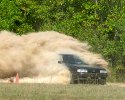
Does anyone think the truck helped/hindered the conditions? On one hand it was fast and had big tires, but on the other, the tires were wide so maybe it made "better" ruts(btw are trucks allowed now?).
I think the truck definitely contributed to the course deterioration, though how much more damage
it did compared to the
other 8 NO4 cars I don't know. He definitely won the contest for most-aggressive tires, but he didn't appear to be driving that aggressively. This was his first off-road event in that truck, and I thought he drove a pretty smart event. He didn't really understand the significance of the cones till the end, though, when I told him he would've been 3rd overall if he'd stayed clean.
Oh, and trucks have never been
disallowed. We've just never had one show up before.
Quote:
At what entry number do we no longer need to work 2 shifts? There are definately fewer cone calls in rallyX compared to autoX.
That depends on the number of worker stations. Another good thing about this compact course is that we only needed 4 stations, so if we'd checked the numbers we might've seen we could get by with folks only working once. But it's something that has to be figured out, and it didn't occur to anyone to check. Take the number of drivers in each heat and subtract the number of workers required to staff the course (including timing, start, grid, etc). If you've still got half your folks left, then people should only have to work once- otherwise they must work twice. This calculation needs to be done for the
smaller of the run groups. Now that we're starting to get consistently larger fields, we should really be doing those calculations before each event. Thanks for volunteering, PJ!


 Login
Login Register
 FAQ
FAQ Search