According to Hoosier it appears you should not expose the A6's to freezing temps:
http://www.hoosiertire.com/rrtire.htm"FREEZE WARNING
Freeze Crack Advisory: This advisory addresses proper storage and use of Hoosier tires in cold conditions. Hoosier Tires, especially asphalt and hard compound tires, may experience Rubber Cracking if the tires are transported, crushed, flexed or stressed when frozen. The following guidelines are provided to avoid this problem.
1. Always store Hoosier Racing Tires indoors at temperatures above 32° F.
2. If tires have been subject to 32° F or less, allow them to warm to room temperature (about 70° F)
for a minimum of 24 hrs before tire is mounted, transported or flexed.
3. Always use spare tires not intended for future competition to store vehicles for prolonged periods
of time or winter transport.
4. If below freezing temperatures are expected, please consider shipping tires once more favorable conditions exist.
Do not use tires that have evidence of Freeze Crack Damage."
Also, Woody from TireRack posted this in a RoadRaceAutox thread last month.
"As for the tipping point, and what tire actually works better, it all depends. Surface, conditions, and most importantly Tire A versus Tire B. There are some information sources that make a blanket statement of below 45 degrees you should take off summer tires and install winter tires (skipping A/S tires altogether). I'm not so sure that's always the case. Especially if you can get any temperature into your tires. Even if the tread warms to just 50-60 degrees while driving.
Max Performance summer tires like Conti DW are very good in the wet, and the Conti is particularly good under braking (a primary design criteria for all Conti tires, BTW). The grip/slip characteristics of summer tires get more sketchy and variable as the temperature gets into the low 40s or lower, which quickly shakes the confidence of the driver. But if you take an objective measurement you will find the grip of most summer tires is still better than an all-season or winter tire. It may be harder to drive but I'd bet lap time would be faster.
I did an anecdotal braking test some years ago with summer, all-season and winter tires (all now discontinued) on the Tire Rack test track, with ambient temps at 29 degrees and a light dusting of snow on the surface. I prepped the braking area by driving back and forth on it with another set of tires to create a 2-track lane where you could see the texture of the pavement in the driving line. Even in these conditions the summer tire actually stopped shorter than the winter or all-season tires. The ABS action felt herky-jerky as the summer tires gripped and slipped, but the car always stopped considerably shorter with the summer tires.
The best advice is to consider the most extreme conditions you'll have to race in, and plan for that. Let's face it, most of us don't autocross much at 34 degrees and raining. And if we do it's a local for fun rather than racing for a jacket in Lincoln. But if your conditions warrant a dedicated tire for cold + wet conditions, I'd suggest a good summer like the Conti DW, or one of the others such as Michelin PSS or Bridgestone S-04. Unless you plan on having to trudge through snow, avoid all-season tires."
According to "me"

Danville surface has a lot of "texture" which may create grip with a relatively heavy car.
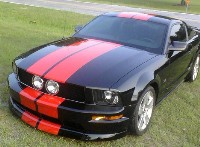
For example the oem all seasons on my Mustang produced .9 to 1. g cornering at the Evo school in November.
Braking around .8 g and forward acceleration over .5 g (starting in second gear with the automatic and T/C off).
I'm sure those numbers are significantly better than the tires would permit on a smoother surface or a lighter car.
After the event the tires also gained "texture".
Personally, it is going to be far too cold for my slicks or my driver and even more importantly for my crew!!!

 Login
Login Register
 FAQ
FAQ Search