Aaron Buckley wrote:
I have to say Chuck... I'm impressed

- AB

?? CanAm?
Adding to the THSCC Continuing Education Series of 1970's Two-Stroke Motorcycles...
CanAm had the highest performance 2-stroke engines of their era coupled with a very strong, well-designed (remember, no CAD in those days) frame that was extremely stiff juxtaposed to the Japanese flexi-flyers of the day. CanAm (Bombardier) used a rotary valve induction system that was uncommon (Kawasaki dual-purpose two-stokes used them, and small Suzuki dirt bikes (i.e. TS100)), but CanAm tuned it for maximum power and applied it to a motox bike with a very novel design. There was no other motox bike of the day with a rotary valve engine. The great part of it is that it prevents the engine from loading up when you lug it off the powerband. In addition, it allowed more precise intake tuning at high rpm. It allows an engine designer to have a very large intake tract to flow lots of air at low pressure drops while at the same time not completely losing low rpm, "off-pipe" (to use common parlance of the day), torque.
The main competitor at the time was the first generation Honda Elsinore CR-125. It was "the" dominant bike of the time just prior to long-travel suspension becoming the new driving force in dirt bike evolution. The '75 CanAm had "forward mounted" shocks, where shocks were moved up the swingarm to gain more travel at the axle. Hence it was one of the first motox bikes to move into the new coming era. ~9-months later the Suzuki RM-125 was introduced with an even more radical, 1st generation, long travel suspension (forward mounted and canted over shocks). However, the CanAm still outdid the zook in engine performance with that hot Bombardier motor.
Racing against a CR-125, once the CanAm was in 3rd gear (of 6), it was all over. The 125MX2 was just as quick as hot 250 enduro bikes of the time (i.e. Penton 250) as long as you kept it "on the pipe", so to speak. It's powerband is from about 7000rpm to 10,000 rpm, and off that powerband it drops off very quickly. Still, off the powerband, it was much more tractable than the typical 125 motox bike which would "load up" and foul its spark plug, etc. For a time, a CanAm held the world speed record at the Salt Flats for a stock 125cc engine bike.
If anyone hasn't driven a 2-stroke 125 motox bike, don't pass up the experience if you get the chance. It gives "high rpm torque" a whole new definition. The hit you get right at the transition where everything (intake timing, transfer ports, exhaust ports and expansion chamber tuning) begins to resonate, and that climb up that RAPIDLY building torque curve, will provide a new internal map for you on engine performance. Makes the power curve of a first generation 930 turbo seem like a pansy.
I can't imagine what a modern 125cc 2-stroke motox bike must be like...oh wait, I think they've disappeared now.


EDIT: Just found a link about CanAm. Looks like the 125cc land speed record still holds...don't know what class it was in though. So here's a link to close out this installment of the history of two-stokes:
http://www.rotax.com/NR/rdonlyres/FFB15DA2-3B90-465A-9D3B-93222E80B637/0/CanAm_HistoryEN.pdf
 Login
Login Register
 FAQ
FAQ Search




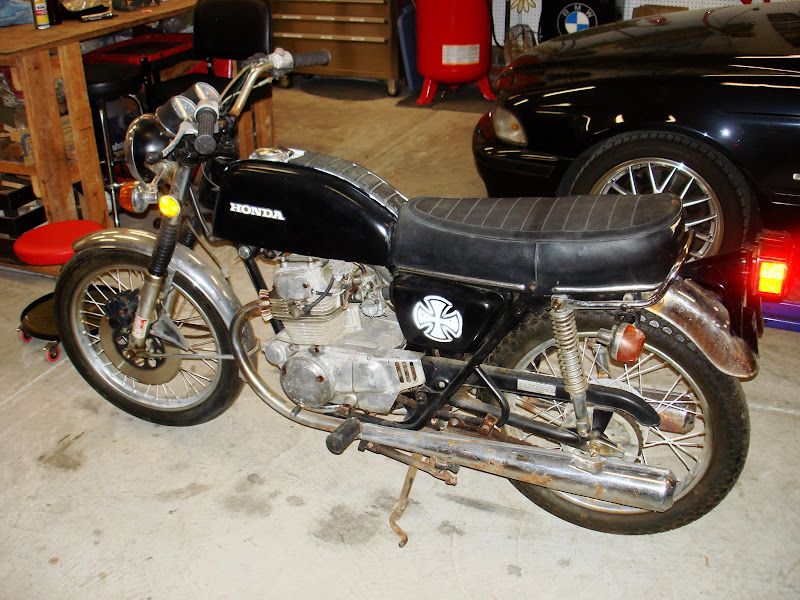
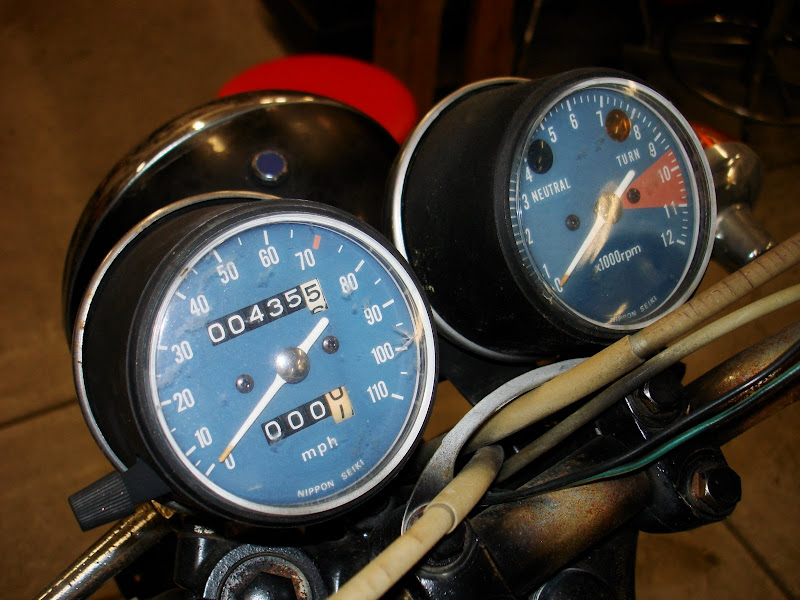
 It hadn't been started in many years, but it didn't take much to get it running. Hopefully it isn't still radioactive.